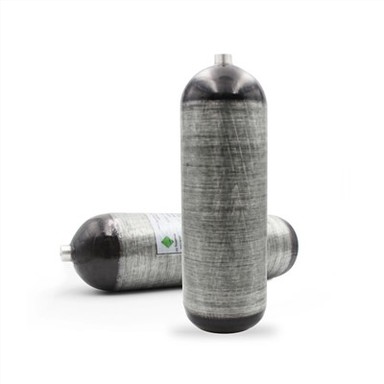
Vehicle Hydrogen Cylinder
Carbon fiber oxygen cylinder is a new material cylinder developed in recent years. It is characterized by its light weight, long service life, corrosion resistance, good safety and long service life compared with steel cylinders. Its use in various positive pressure respirators can greatly reduce the self weight of equipment.
- Fast Delievery
- Quality Assurance
- 24/7 Customer Service
Product Introduction
Introduction to Vehicle Hydrogen Cylinder
Our vehicle hydrogen cylinders are key components designed specifically for hydrogen-powered vehicles, providing clean and efficient energy storage solutions for vehicles.
Our vehicle hydrogen cylinders are made of high-strength carbon fiber composite materials and have excellent pressure resistance. For example, the working pressure can reach 30MPa, which can ensure the safe storage of hydrogen in various complex use environments. Our vehicle hydrogen cylinders are also specially processed and quality tested, and have a long service life. Generally speaking, the design life can reach more than 15 years, which can provide users with long-term and stable services.
Main Performance Indexes
The volume of vehicle hydrogen cylinder is 9L, 6.8L, 3L, 2.5L, 1.6L, etc
Working pressure: 30MPa
Hydrostatic test pressure: 45MPa
Service life: 15 years
Advabtages
Material advantages:
Car hydrogen cylinders usually use high-strength carbon fiber composite materials, which have extremely high strength and toughness. For example, its tensile strength can reach more than 3500MPa, which can withstand the storage pressure of high-pressure hydrogen without rupture. At the same time, carbon fiber composite materials also have good corrosion resistance and fatigue resistance, ensuring the safety of hydrogen cylinders during long-term use.
Material durability:
Carbon fiber composite materials have good corrosion resistance and fatigue resistance, and can maintain good performance during long-term use. For example, after rigorous testing and verification, the service life of car hydrogen cylinders can reach more than 15 years, or even longer.
High-pressure storage:
Car hydrogen cylinders usually use high-pressure storage technology, and the current common storage pressures are 35MPa and 70MPa. Compared with low-pressure storage, high-pressure storage can store more hydrogen in the same volume of cylinders. For example, a 70MPa car hydrogen cylinder can store about twice as much hydrogen as a 35MPa cylinder.
Safety design:
Hydrogen cylinders have undergone strict safety design, including multi-layer structure, explosion-proof valve, pressure sensor, etc. For example, hydrogen cylinders are generally composed of an inner lining layer, a fiber winding layer and an outer protective layer. The inner lining layer is usually made of polymer materials, such as polyethylene or polyamide, which have good sealing and corrosion resistance. The fiber winding layer uses high-strength carbon fiber, and through a specific winding process, it ensures the strength and stability of the hydrogen cylinder under high pressure. The outer protective layer protects the fiber winding layer and prevents external damage.
Applications
Hydrogen fuel cell vehicles
In hydrogen fuel cell vehicles, vehicle hydrogen cylinders are storage containers for hydrogen. Hydrogen reacts chemically with oxygen in the fuel cell to generate electricity to drive the vehicle.
Logistics and transportation vehicles
Vehicle hydrogen cylinders have broad application prospects in heavy trucks and logistics distribution vehicles. Some large logistics companies have begun to try to use hydrogen fuel cell heavy trucks for long-distance transportation. The vehicle hydrogen cylinders equipped with these vehicles can store enough hydrogen to meet the endurance requirements of long-distance transportation. At the same time, hydrogen fuel cell trucks have the advantages of high power output and low operating costs, which can improve the efficiency and economy of logistics transportation.
Buses
Hydrogen fuel cell buses are one of the important application areas of vehicle hydrogen cylinders. Buses have fixed routes and hydrogen refueling facilities are relatively easy to lay out. Hydrogen fuel cell buses have begun to be put into operation on bus routes in some cities. The vehicle hydrogen cylinders equipped with these buses can meet the endurance requirements of daily operations and provide citizens with an environmentally friendly and comfortable way of travel.
Engineering vehicles and sanitation vehicles
In some special operating environments, such as construction sites and sanitation operations, the environmental performance of vehicles is required to be high. Hydrogen fuel cell engineering vehicles and sanitation vehicles can be equipped with vehicle hydrogen cylinders to achieve zero-emission operations. Hydrogen fuel cell sanitation vehicles can be used for garbage collection and road cleaning in cities without producing harmful exhaust emissions, reducing pollution to the urban environment.
FAQ
1. Do car hydrogen cylinders require special maintenance?
Car hydrogen cylinders need regular maintenance and inspection. Generally speaking, appearance inspection, pressure test, leak detection, etc. need to be carried out at prescribed time intervals. At the same time, during use, avoid damage to hydrogen cylinders such as impact and scratches, and keep their surfaces clean and dry. If you find a problem with the hydrogen cylinder, you should contact a professional in time to deal with it.
2. Will a car hydrogen cylinder explode if a collision occurs?
Under normal circumstances, even if a collision occurs, car hydrogen cylinders will not explode easily. Hydrogen cylinders have undergone rigorous collision tests and can maintain integrity in a certain degree of collision. Moreover, the diffusion rate of hydrogen is very fast, and even if a leak occurs, it will quickly diffuse into the air and will not form a combustible mixture. However, if the collision is very serious and the hydrogen cylinder is severely damaged, the possibility of danger cannot be completely ruled out.
3. What is the service life of a car hydrogen cylinder?
Generally speaking, the design life of a car hydrogen cylinder is more than 15 years, depending on different products and usage. During use, regular inspection and maintenance are required in accordance with regulations to ensure the safety and performance of the hydrogen cylinder. If the hydrogen cylinder is found to have safety hazards during testing, it will be repaired or replaced in time.
4. How to ensure the safety of hydrogen cylinders for vehicles?
Hydrogen cylinders for vehicles have strict safety standards in the design and manufacturing process. First of all, hydrogen cylinders are usually made of high-strength carbon fiber composite materials with good pressure resistance and impact resistance. Secondly, hydrogen cylinders are equipped with multiple safety devices, such as safety valves, pressure sensors, etc. When the pressure in the bottle rises abnormally, the safety valve will automatically open to release hydrogen to ensure safety. In addition, during use, the vehicle will also monitor the hydrogen cylinder in real time, and will promptly alarm if any problems are found.
5. What is the storage capacity of hydrogen cylinders for vehicles?
The storage capacity of hydrogen cylinders for vehicles varies depending on different models and needs. Generally speaking, the capacity of common hydrogen cylinders for vehicles is about 3 kg to 10 kg of hydrogen. Taking a hydrogen fuel cell car as an example, a full tank of hydrogen can travel hundreds of kilometers.
Hot Tags: vehicle hydrogen cylinder, China vehicle hydrogen cylinder manufacturers, suppliers, factory, Scba Scuba Cylinder,